
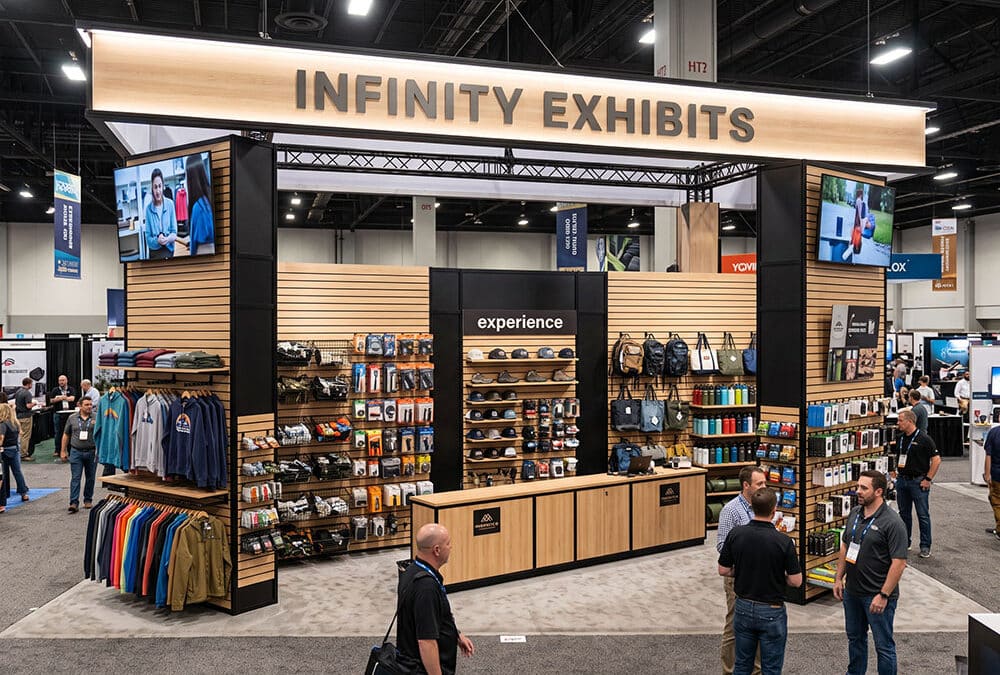
Trade show booths have to work hard without looking hectic or gaudy. Exhibitors need flexible ways to showcase products and keep displays organized, but those practical features should still support a polished brand image. Combining slatwall utility with high-end custom finishes creates a smart balance between adaptable merchandising and sophisticated booth design.
With the right materials and thoughtful placement, slatwall can become an intentional part of the exhibit rather than a purely functional addition. The result gives businesses a flexible exhibit that looks professional while adapting to changing products and trade show goals.
Start With the Booth’s Functional Needs
Before choosing finishes, determine exactly what the slatwall needs to accomplish. Some exhibitors need shelves for physical products, while others rely on hooks, monitor mounts, literature holders, or specialized accessories. These requirements help determine how much slatwall the booth needs and where designers should place it.
Think about how staff members will use these areas during an actual event. Products may need restocking, and featured items can shift throughout the day. Easy access helps employees maintain the display without disrupting conversations or creating unnecessary clutter.
Planning these details early also prevents practical features from interfering with graphics or meeting areas. Designers can reserve the right amount of space for merchandise while keeping sightlines clear. This balance creates a booth that works efficiently without sacrificing its visual impact.
Treat Slatwall as Part of the Architecture
Slatwall should feel like an intentional part of the exhibit rather than an accessory added at the end. Designers can integrate panels into architectural walls, towers, counters, product displays, and other custom structures. This approach creates smoother visual transitions between merchandising areas and surrounding booth elements.
Strategic placement also prevents horizontal grooves from overwhelming the design. Instead of covering every available surface, exhibitors can reserve slatwall for specific product zones. Solid panels and branded graphics can surround these areas to create contrast and visual structure.
Built-in placement can make even highly functional areas look sophisticated. Visitors notice a unified environment rather than a collection of separate components. That cohesion matters most for businesses that want their booth to communicate quality from the moment attendees approach.
Select Finishes That Match the Brand
Slatwall does not need to resemble the basic panels commonly associated with traditional retail environments. Custom colors, wood-inspired surfaces, laminates, and other decorative treatments can coordinate with surrounding exhibit materials. The finish should support the overall brand identity rather than stand apart from it.
Different brands naturally call for different visual approaches. A technology company might prefer smooth surfaces and understated detailing, while a lifestyle brand could benefit from warmer textures. Designers should consider the impression the entire environment needs to create before settling on a finish.
Create Contrast Without Adding Clutter
A premium booth does not require every material to match perfectly. Controlled contrast can make merchandise displays more noticeable and help important products command attention. A darker slatwall section against lighter architectural elements, for example, can naturally create a strong focal point.
However, too many competing materials can make the booth feel visually crowded. Flooring, counters, furniture, graphics, lighting, and display walls already contribute to the overall environment. Adding numerous unrelated finishes can prevent visitors from knowing where to focus.
Designers can avoid this problem by developing a limited material palette. Repeating select textures and finishes throughout the exhibit creates visual continuity. This restraint gives merchandise enough space to stand out while keeping the overall booth polished.
Build Flexibility Into Product Displays
Product offerings rarely remain the same from one trade show to another. Exhibitors may introduce new items or attend events with different audiences. Slatwall makes these adjustments easier because staff can reposition compatible accessories without rebuilding the entire display.
Well-designed slatwall trade show booths can support several types of merchandising while maintaining a consistent appearance. Companies can adjust layouts as their needs change. That flexibility can extend a custom exhibit’s usefulness across multiple events.
Depending on the products and booth strategy, exhibitors may incorporate:
- Adjustable shelves for products, samples, or demonstration materials
- Hooks and brackets for packaged or hanging merchandise
- Literature holders for brochures and informational materials
- Specialized mounts for featured products or equipment
- Repositionable accessories for changing merchandising needs
Accessory selection also influences the booth’s overall appearance. Hardware should complement nearby finishes rather than distract from them. Coordinated components help the display remain polished even after staff members rearrange products between events.
Use Lighting to Elevate the Display
Lighting can turn a simple merchandise wall into a stronger visual feature. Focused illumination highlights important products and prevents larger wall sections from looking flat. It can also help separate product categories without adding more physical dividers or excessive signage.
Designers should plan lighting alongside the slatwall instead of treating it as a final addition. Shelf placement, product dimensions, graphics, and architectural elements all influence where fixtures should direct light. Early coordination helps prevent awkward shadows or poorly illuminated merchandise.
Good lighting also supports the premium finishes surrounding the display. Dimensional details and carefully selected surfaces often stand out more under intentional illumination. The booth gains greater visual depth without relying on unnecessary decoration.
Balance Merchandise With Brand Messaging
Slatwall gives exhibitors plenty of room to display products, but that does not mean every inch needs merchandise. Overloading the wall can make individual products harder to notice and create an unnecessarily busy environment. Strategic open space helps important items stand apart.
Brand messaging should complement merchandise rather than compete with it. Designers might position a logo above the display or incorporate branded graphics beside product sections. These elements connect the merchandise to the larger company identity without interrupting the presentation.
Design for Long-Term Adaptability
Trade show strategies change as companies grow. Product lines expand, branding evolves, booth sizes vary, and marketing priorities shift. An adaptable exhibit gives businesses more freedom to respond without replacing major components every time something changes.
Slatwall supports that goal because exhibitors can modify merchandising arrangements with relative ease. New shelves, hooks, or other accessories can accommodate different products. Companies can refresh the display while preserving the larger architectural framework and custom finishes.
Long-term adaptability can also help businesses use their exhibit across different booth configurations. Custom fabrication can bring together merchandising areas, storage rooms, conference spaces, counters, and branded structures. Each feature supports a larger system instead of functioning independently.
Make Practical Features Look Purposeful
Combining slatwall utility with high-end custom finishes requires more than selecting an attractive panel. Designers need to consider placement, branding, and visitor movement as connected parts of the booth. Careful coordination allows practical features to strengthen the exhibit rather than compromise its appearance.
A strong design gives merchandise enough prominence while keeping the environment organized. Visitors can focus on products and brand messaging without encountering unnecessary visual distractions. Staff members also gain a flexible system that they can adjust as products and event requirements change.
Infinity Exhibits creates custom trade show displays that combine practical booth requirements with polished design. Custom fabrication can integrate product merchandising and meeting spaces into one cohesive environment.
The result is a professional exhibit that supports both current trade show goals and future needs. Contact us today to learn more about our slatwall trade booths and request a quote for your next trade show.
Let's Design Your Display!
What type of display are you looking for?



WHAT CUSTOMERS SAY ABOUT US











- Maximize Product Visibility With Gridwall Display Systems - October 23, 2026
- Investing in Custom Exhibits: ROI Beyond the Show Floor - October 23, 2026
- Upgrading From a Pop-Up to a Professional Portable System - October 23, 2026
